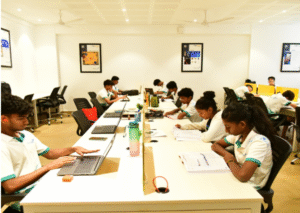

Mainstream schooling in India has long followed a fixed path with rigid curricula, high-stakes exams, large class sizes, and an over-reliance on textbooks. But as more parents and educators begin to question whether this system truly serves every child, an important shift is underway. Enter alternative education in India, a growing movement that challenges conventional schooling norms and places the child, not the system, at the centre of learning.
What is alternative education?
Alternative education refers to a range of schooling approaches that differ from conventional models in their teaching methods, learning environments, and educational philosophies. Typically, alternative schools in India are smaller, more intimate setups that give each child the space to learn at their own pace.
At its core, alternative education focuses on:
- Learning over rote memorisation
- Process over results
- Understanding over grading
- Curiosity over conformity
Children are not expected to all meet the same standard at the same pace. Instead, they are encouraged to explore, question, collaborate, and express themselves in ways that feel natural and meaningful.
Why alternative education in India is growing

The growing popularity of alternative education in India is closely tied to changing expectations around what school should offer. Many parents now ask themselves: Does my child enjoy learning? Are they growing emotionally, socially, and creatively, or are they just preparing for the next exam?
Here are a few reasons why more families are considering alternative options:
✅ Personalised attention – Smaller class sizes allow for deeper teacher-student relationships and individualised learning plans.
✅ Holistic learning – Music, movement, art, discussions, and real-world projects form the core of many alternative curriculums.
✅ Flexible assessment – Learning is evaluated through observation, portfolios, and feedback, rather than just tests and report cards.
✅ Focus on life skills – Communication, collaboration, emotional intelligence, and resilience are woven into everyday learning.
✅ Freedom to explore – Without the pressure of standardised outcomes, students are free to follow their passion
Common misconceptions about alternative education
Despite its rising popularity, alternative education in India is still misunderstood in many circles. Let’s address a few myths:
Myth 1: Alternative schools are only for children who struggle in mainstream setups
Not true. Children of all abilities attend these schools, many of them gifted, curious, or simply needing a different learning environment.
Myth 2: They don’t focus on academics
Alternative schools care about academic progress just like regular schooling.
Myth 3: These schools aren’t recognised
Most alternative schools are affiliated with boards like NIOS, giving students access to certified qualifications and higher education.
NIOS and the role of open schooling
One of the most trusted options within alternative education in India is the National Institute of Open Schooling(NIOS). This government-recognised board supports flexible, student-paced learning with a wide choice of subjects. It allows students to design a learning journey that fits their goals, whether that’s academics, sports, arts, or entrepreneurship.
Where Prose Edu fits in
At Prose Edu, we believe in the power of alternative pathways to support real growth. Based in Bangalore, we follow the NIOS curriculum, offering student-athletes a structured, yet flexible schooling programme that accommodates their training, travel, and tournament schedules.
For students pursuing excellence in sport, alternative education in India provides the flexibility and focus they need to succeed in both academics and athletics.
Final Thoughts
As the world evolves, so too must our approach to learning. Alternative education in India is not just a trend, but a growing response to the need for schooling that is relevant, compassionate, and future-ready.
If you’ve ever felt that you need something more than what traditional schools offer, exploring alternative education in India could be the step that transforms your learning journey and life.